
The new name of Sri Ram Agencies
98893 55660
System Types

On-Grid vs Hybrid vs Off-Grid — which one is right for you?

Every home and business has different needs. Here is an honest comparison of all three systems.

Most popular

On-Grid Solar

Grid-connected · No battery

  • Lowest cost
  • Net Metering brings bill close to zero
  • Eligible for residential subsidy
  • Simple, long-life system
  • Shuts off during a grid outage for safety
  • No battery backup

Best for: Town homes with stable grid (20+ hours of power daily).
Best for power cuts

Hybrid Solar

Grid + Solar + Battery

  • Bill savings + backup during power cuts
  • Keeps critical loads running (fan, fridge, Wi-Fi)
  • Net Metering still possible
  • Future-proof setup
  • Higher cost because of the battery
  • Subsidy reduced for the battery portion

Best for: Areas with frequent power cuts, hospitals, shops and homes with sensitive loads.

Standalone

Off-Grid Solar

No grid · 100% solar + battery

  • No dependency on the grid
  • Perfect for farms, remote shops and weak-grid areas
  • Self-sufficient setup
  • Highest cost
  • Battery replacement every 5–8 years
  • Not eligible for subsidy

Best for: Where the grid is missing or very weak — farms, remote shops, telecom towers.

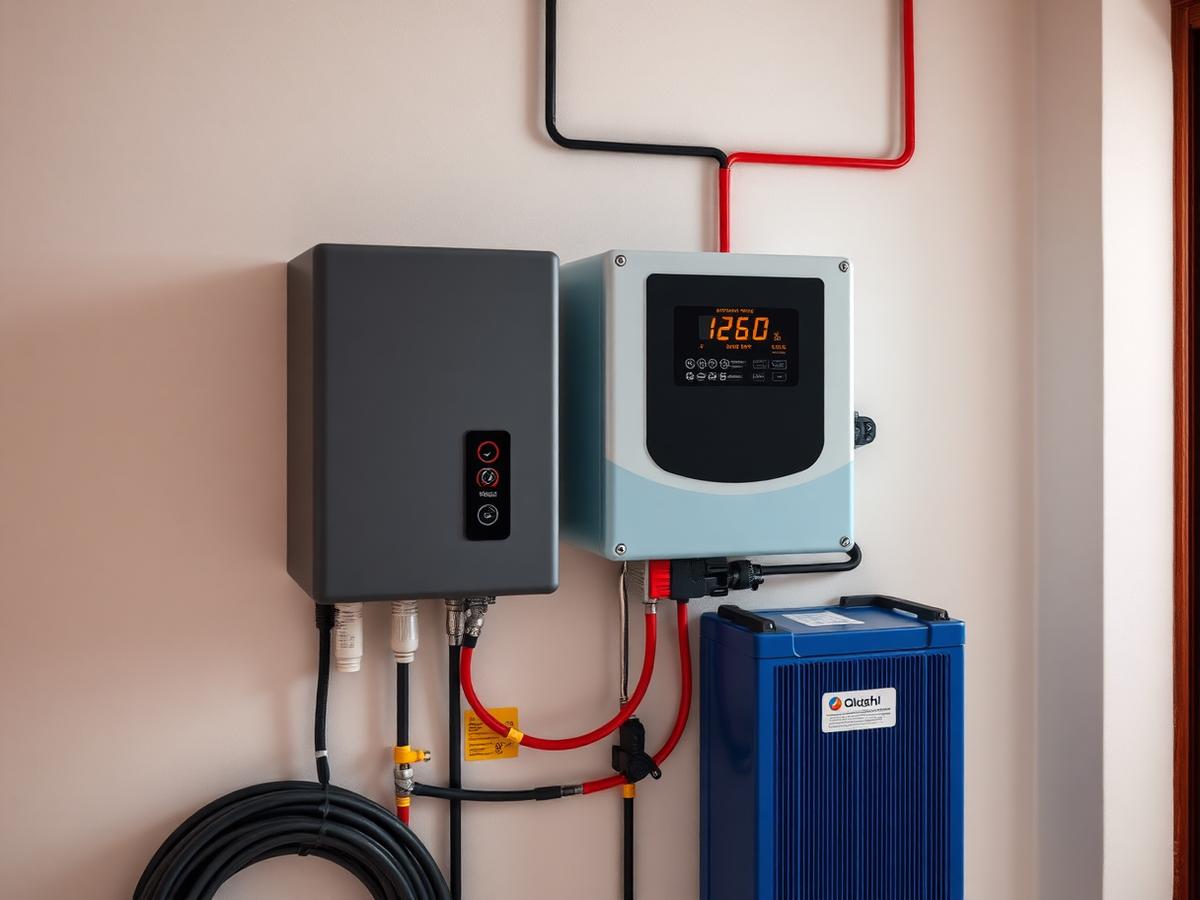
Hybrid solar inverter and battery setup

Confused? A simple thumb-rule

  • Town home, 20+ hours stable grid, only goal is lower bill → On-Grid Solar
  • Lower bill + backup during power cuts → Hybrid Solar
  • No grid or very weak grid → Off-Grid Solar

Need help choosing the right system?

We give an honest recommendation after looking at your load, area and grid quality.

System Types — FAQ

A grid-connected solar system that generates power during the day. Surplus units flow to the grid via Net Metering and reduce your bill. No battery, so lower cost.